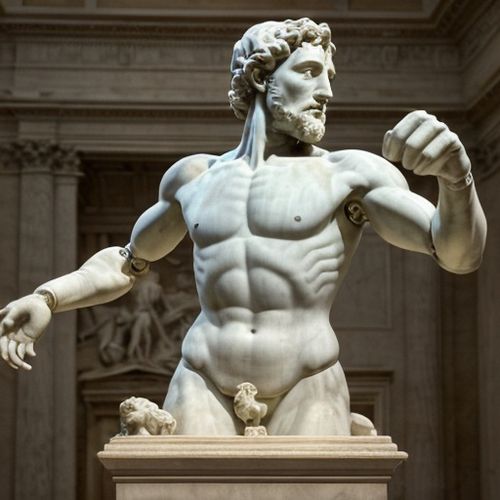
The art world has always been a fascinating intersection of creativity and technology, where the past and the future collide in unexpected ways. One such remarkable collision is the robotic replication of Michelangelo’s iconic Slave statues. These unfinished masterpieces, originally intended for the tomb of Pope Julius II, have long been studied for their raw, emotional power and the visible struggle between the stone and the artist’s hand. Now, advanced robotics and precision carving techniques are bringing a new dimension to these works, not by replacing human artistry but by expanding our understanding of Michelangelo’s process.
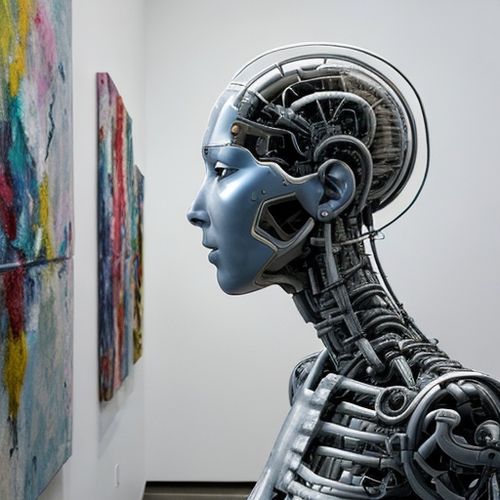
At the heart of this project lies a sophisticated robotic arm equipped with cutting-edge scanning and carving capabilities. The process begins with a high-resolution 3D scan of the original Slave statues, capturing every groove, chisel mark, and subtle undulation of the marble. This digital blueprint is then translated into a language the robot can understand, allowing it to replicate the sculptor’s movements with astonishing accuracy. The result is not a mere copy but a re-creation that mirrors the physicality of Michelangelo’s technique—something that traditional casting or milling could never achieve.
What makes this endeavor so compelling is the way it bridges the gap between Renaissance craftsmanship and modern engineering. Michelangelo famously described his sculpting process as "freeing the figure trapped in the marble," a poetic notion that speaks to the intimate dialogue between artist and material. The robotic replication, surprisingly, echoes this sentiment. While the robot lacks the artist’s intuition, its precision allows us to see the Slave in a new light—how each strike of the chisel was a deliberate step toward revealing the form within. It’s a reminder that technology, when used thoughtfully, can deepen our appreciation of art rather than diminish it.
Critics might argue that such projects risk reducing art to a technical exercise, stripping away the human element that gives it soul. But the team behind this project insists otherwise. The goal isn’t to replace Michelangelo’s genius but to explore it. By studying the robot’s replication, art historians and conservators can gain insights into the tools, pressures, and angles Michelangelo employed—details that might otherwise be lost to time. In this sense, the robot becomes a collaborator across centuries, offering a window into the sculptor’s studio.
The implications of this technology extend beyond art historical research. For conservators, robotic replication provides a way to create exacting surrogates for fragile originals, allowing the public to experience works that are too delicate to display. For educators, it offers a tangible way to teach sculptural techniques without risking damage to priceless artifacts. And for contemporary artists, it opens up new possibilities for blending traditional methods with digital innovation. The Slave project, then, is more than a technical marvel; it’s a catalyst for rethinking how we preserve, study, and interact with art.
As the robotic carving nears completion, the replicated Slave stands as a testament to the enduring power of Michelangelo’s vision. The raw, unfinished quality of the original—the sense of a figure straining against its marble confines—is palpably present in the replica. Yet there’s also something undeniably modern about it, a silent dialogue between 16th-century craftsmanship and 21st-century technology. Perhaps that’s the most fitting tribute to Michelangelo, an artist who himself pushed the boundaries of what was possible. In the end, the robot doesn’t compete with the master; it honors him by reminding us that art, in any era, is about the relentless pursuit of form, meaning, and the unyielding desire to bring the invisible into being.
By Daniel Scott/Apr 12, 2025
By Emily Johnson/Apr 12, 2025
By Sarah Davis/Apr 12, 2025

By Ryan Martin/Apr 12, 2025
By Emma Thompson/Apr 12, 2025
By George Bailey/Apr 12, 2025
By Rebecca Stewart/Apr 12, 2025
By Elizabeth Taylor/Apr 12, 2025
By Samuel Cooper/Apr 12, 2025
By James Moore/Apr 12, 2025

By David Anderson/Apr 12, 2025
By George Bailey/Apr 12, 2025
By Sarah Davis/Apr 12, 2025
By Benjamin Evans/Apr 12, 2025
By Michael Brown/Apr 12, 2025
By Victoria Gonzalez/Apr 12, 2025

By David Anderson/Apr 12, 2025

By David Anderson/Apr 12, 2025
By Olivia Reed/Apr 12, 2025
By Rebecca Stewart/Apr 12, 2025