The art world is no stranger to controversy, but the recent use of 3D printing to replace missing components of Baroque sculptures has sparked particularly heated debates. As museums and restoration experts increasingly turn to digital technologies to address gaps in historical artifacts, questions about authenticity, artistic integrity, and the limits of intervention have come to the forefront. The tension between preservation and innovation has never been more palpable.
The Allure of 3D Printing in Art Restoration
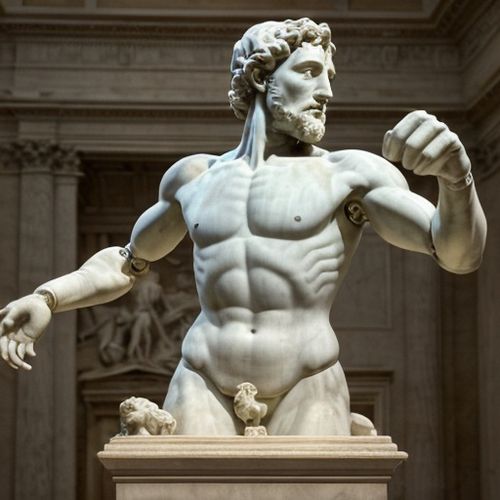
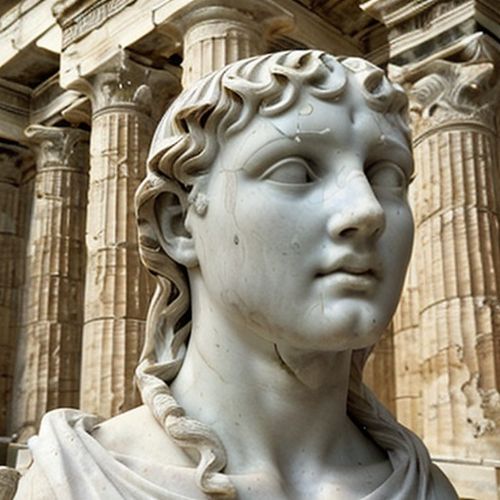
Baroque sculptures, known for their dramatic expressions and intricate details, often suffer from centuries of wear, damage, or outright loss of limbs, accessories, or ornamental elements. Traditional restoration methods rely on skilled artisans painstakingly recreating missing parts by hand—a process that is both time-consuming and expensive. Enter 3D printing, which promises precision, efficiency, and the ability to replicate even the most complex geometries with minimal human intervention.
Proponents argue that 3D printing allows for a level of accuracy that manual restoration cannot always achieve. By scanning surviving counterparts or using historical references, digital models can be created to fill voids in a sculpture’s composition. For institutions with limited budgets, this technology offers a cost-effective solution to restore artworks to their former glory without compromising on detail.
The Backlash from Purists
However, not everyone is convinced. Critics, including many art historians and conservators, argue that 3D-printed replacements lack the soul of the original. Baroque sculpture is as much about the artist’s hand as it is about the final product—the chisel marks, the subtle imperfections, and the organic flow of the material are all integral to the work’s authenticity. A machine-generated component, no matter how precise, can never replicate the human touch that defines these masterpieces.
Some have gone further, calling the practice a form of "artistic forgery." They contend that filling in missing parts with 3D-printed substitutes misleads viewers into believing they are seeing a complete, original work. This, they say, distorts art history and undermines the public’s understanding of how these sculptures have aged and evolved over time.
Ethical Dilemmas in Conservation
The debate also raises broader ethical questions about the role of technology in art conservation. Where should the line be drawn between restoration and reconstruction? Is it acceptable to replace a missing arm or a broken wing if the original artist’s intent can only be guessed at? And who gets to decide—curators, conservators, or the public?
One particularly contentious case involved a 17th-century marble angel in a European cathedral, whose missing trumpet was replaced with a 3D-printed replica. While the cathedral’s custodians praised the result as seamless, art scholars accused them of "rewriting history." The conflict highlights the delicate balance between preserving an artwork’s integrity and making it accessible or visually coherent for modern audiences.
The Middle Ground: Transparency and Hybrid Approaches
Amid the polarized opinions, some institutions are seeking compromise. A growing number of museums are adopting a "visible mending" approach, where 3D-printed additions are deliberately distinguishable from the original. This method acknowledges the intervention while allowing viewers to appreciate the artwork in its entirety without deception.
Others advocate for hybrid techniques, combining 3D printing with traditional craftsmanship. For example, a printed base might be used as a scaffold, which is then manually finished by a sculptor to mimic the texture and style of the original. Such collaborations between technology and human skill could offer a way forward that satisfies both practical and philosophical concerns.
The Future of Art Restoration
As 3D printing technology continues to advance, its applications in art restoration will only expand. The current controversies may well be a precursor to larger discussions about how far we should go in "fixing" the past. For now, the debate over Baroque sculptures serves as a microcosm of the broader clash between tradition and innovation.
What remains clear is that there are no easy answers. Each damaged artwork presents unique challenges, and the decision to use 3D printing—or not—must be made on a case-by-case basis. What’s at stake is not just the preservation of individual pieces, but the very principles that guide how we engage with cultural heritage in an increasingly digital age.
By Daniel Scott/Apr 12, 2025
By Emily Johnson/Apr 12, 2025
By Sarah Davis/Apr 12, 2025

By Ryan Martin/Apr 12, 2025
By Emma Thompson/Apr 12, 2025
By George Bailey/Apr 12, 2025
By Rebecca Stewart/Apr 12, 2025
By Elizabeth Taylor/Apr 12, 2025
By Samuel Cooper/Apr 12, 2025
By James Moore/Apr 12, 2025
By David Anderson/Apr 12, 2025
By George Bailey/Apr 12, 2025
By Sarah Davis/Apr 12, 2025
By Benjamin Evans/Apr 12, 2025
By Michael Brown/Apr 12, 2025
By Victoria Gonzalez/Apr 12, 2025

By David Anderson/Apr 12, 2025
By David Anderson/Apr 12, 2025
By Olivia Reed/Apr 12, 2025
By Rebecca Stewart/Apr 12, 2025