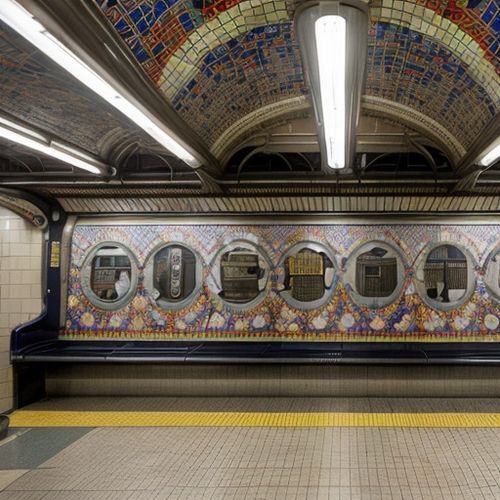
The Metropolitan Transportation Authority (MTA) has unveiled an ambitious $20 million restoration initiative aimed at preserving and revitalizing the iconic mosaics that adorn New York City’s subway stations. These intricate tile artworks, many of which date back to the early 20th century, serve as both historical landmarks and cultural touchstones for millions of daily commuters. The project, which spans several years, seeks to address decades of wear and tear caused by environmental factors, vandalism, and the sheer volume of passengers passing through the system each day.
For generations, the mosaics have been more than mere decoration; they are a visual narrative of the city’s evolution. From the bold geometric patterns of the IND stations to the whimsical depictions of local history in the BMT lines, these artworks reflect the neighborhoods they serve. However, time has not been kind to them. Faded colors, cracked tiles, and missing pieces have become increasingly common, prompting calls for intervention from preservationists and transit advocates alike. The $20 million allocation marks one of the largest dedicated efforts to restore these public art pieces in recent memory.
The restoration process is far from straightforward. Each mosaic requires meticulous attention, with conservators often working from original blueprints and archival photographs to ensure accuracy. Specialized artisans are tasked with recreating tiles that match the exact hue and texture of the originals, a painstaking endeavor that underscores the project’s complexity. In some cases, modern materials are being used to reinforce the structural integrity of the artworks while maintaining their historical authenticity. The goal is not just to repair but to future-proof these pieces for coming decades.
Public reaction to the initiative has been largely positive, though not without its critics. Some argue that the funds could be better spent addressing the subway’s more pressing infrastructure issues, such as signal modernization or accessibility upgrades. Others counter that the mosaics are an integral part of the city’s identity and deserve the same level of care as any other historic asset. “These artworks are New York,” remarked one commuter at the 86th Street station. “Losing them would be like erasing a piece of our collective memory.”
The MTA has emphasized that the project is part of a broader strategy to improve the rider experience. By investing in the system’s aesthetic and cultural elements, the authority hopes to foster a greater sense of pride and ownership among New Yorkers. Early phases of the restoration have already been completed at select stations, with plans to expand to additional locations in the coming years. As the work progresses, the mosaics will continue to serve as a testament to the city’s enduring creativity and resilience, one tile at a time.
Beyond the immediate visual impact, the restoration effort has sparked conversations about the role of public art in urban spaces. In an era of rapid development and homogenization, the mosaics stand as a reminder of the value of craftsmanship and local storytelling. Their preservation is not just about maintaining beauty but about honoring the voices of the artists and communities that shaped them. For many, the $20 million price tag is a small cost to pay for safeguarding a legacy that transcends generations.
As the project moves forward, the MTA has pledged to keep the public informed through regular updates and community engagement sessions. Transparency, officials say, is key to ensuring that the restoration aligns with the expectations of both riders and preservationists. Whether viewed as a necessary investment or a symbolic gesture, the mosaics’ revival underscores a simple truth: in a city as dynamic as New York, even the smallest details matter. And for those who pause to admire the newly restored tiles, the past will feel very much alive.
By Daniel Scott/Apr 12, 2025
By Emily Johnson/Apr 12, 2025
By Sarah Davis/Apr 12, 2025
By Ryan Martin/Apr 12, 2025
By Emma Thompson/Apr 12, 2025
By George Bailey/Apr 12, 2025
By Rebecca Stewart/Apr 12, 2025
By Elizabeth Taylor/Apr 12, 2025

By Samuel Cooper/Apr 12, 2025
By James Moore/Apr 12, 2025
By David Anderson/Apr 12, 2025

By George Bailey/Apr 12, 2025
By Sarah Davis/Apr 12, 2025
By Benjamin Evans/Apr 12, 2025
By Michael Brown/Apr 12, 2025
By Victoria Gonzalez/Apr 12, 2025

By David Anderson/Apr 12, 2025
By David Anderson/Apr 12, 2025
By Olivia Reed/Apr 12, 2025
By Rebecca Stewart/Apr 12, 2025