The art of building kiwifruit trellises in New Zealand is a practice refined over decades, blending agricultural expertise with innovative engineering. As one of the world’s leading producers of kiwifruit, New Zealand’s approach to trellising is both a science and a craft, ensuring optimal growth conditions for the vines while maximizing yield and fruit quality. The process is far more than just erecting posts and wires—it’s about creating a sustainable structure that can withstand harsh weather, support heavy fruiting loads, and facilitate efficient orchard management.
The foundation of any successful kiwifruit trellis lies in careful planning and site selection. Growers must consider soil type, wind exposure, and sunlight patterns before breaking ground. Unlike other crops, kiwifruit vines are perennial and can remain productive for decades, making the initial setup a long-term investment. The trellis must be robust enough to endure strong winds, which are common in many of New Zealand’s growing regions, while also allowing for easy access during pruning and harvesting.
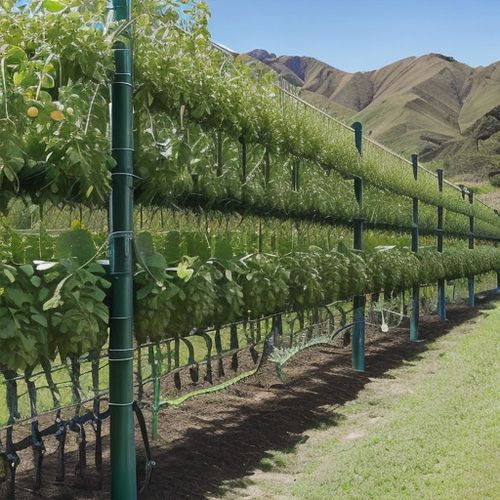
Materials play a critical role in the durability of the structure. Traditionally, treated pine posts were the go-to choice due to their affordability and resistance to rot. However, modern orchards are increasingly turning to steel or concrete posts for their superior strength and longevity. The horizontal support wires, typically made from high-tensile galvanized steel, must be tensioned correctly to prevent sagging under the weight of mature vines. Spacing between posts and the number of wire tiers can vary depending on the kiwifruit variety being grown, with some requiring more vertical space for canopy development.
One of the most distinctive features of New Zealand’s kiwifruit trellising is the canopy management system. The T-bar or pergola-style structures allow for a sprawling canopy that maximizes sunlight exposure—a crucial factor in fruit sweetness and size. This design also promotes better air circulation, reducing the risk of fungal diseases that can thrive in humid conditions. Skilled pruners train the vines along the wires, creating a balanced framework that distributes fruiting wood evenly across the structure.
Innovation continues to shape trellis design in New Zealand’s kiwifruit industry. Some growers are experimenting with adjustable trellis systems that can be modified as the vines mature or in response to changing climate conditions. Others are incorporating technology, such as sensors that monitor wire tension or automated pruning equipment designed to work within the trellis framework. These advancements reflect the industry’s commitment to continuous improvement and efficiency.
The importance of proper trellising becomes especially apparent during harvest season. A well-designed structure allows pickers to work safely and efficiently, with fruit hanging at optimal heights to minimize strain and damage. The trellis also influences post-harvest quality, as fruit that has grown in well-supported, uncrowded conditions tends to have better color, flavor, and storage potential. This attention to detail is part of why New Zealand kiwifruit commands premium prices in international markets.
Maintenance of kiwifruit trellises is an ongoing process that requires vigilance. Regular inspections are necessary to identify any weakening of posts or wires before they fail. In high-wind areas, additional bracing may be needed as the vines grow heavier with age. Some growers implement cover systems over their trellises to protect against hail or excessive sun, adding another layer of complexity to the structure. The most successful orchardists view their trellises as dynamic systems that evolve alongside their vines.
Beyond the practical considerations, there’s an undeniable artistry to New Zealand’s kiwifruit trellises when seen in full growth. The intricate patterns of vines against the sky, the dappled light filtering through the leaves, and the orderly rows stretching across rolling hills all speak to a deep understanding of both horticulture and landscape. It’s this combination of function and beauty that makes the country’s approach to kiwifruit trellising truly remarkable—a testament to decades of refinement and respect for the land.
The future of kiwifruit trellising in New Zealand looks toward sustainability and resilience. As climate patterns shift and environmental concerns grow, researchers are working on trellis designs that use fewer resources while maintaining strength. Some are exploring biodegradable materials or systems that integrate with native vegetation to support biodiversity. What remains constant is the recognition that the trellis is not just support for the vines—it’s the backbone of the entire orchard system, shaping everything from fruit quality to worker safety for generations to come.

By Victoria Gonzalez/Apr 14, 2025

By Sophia Lewis/Apr 14, 2025

By Laura Wilson/Apr 14, 2025
By William Miller/Apr 14, 2025

By Victoria Gonzalez/Apr 14, 2025
By Natalie Campbell/Apr 14, 2025

By Benjamin Evans/Apr 14, 2025
By George Bailey/Apr 14, 2025

By Amanda Phillips/Apr 14, 2025

By Joshua Howard/Apr 14, 2025
By Emily Johnson/Apr 14, 2025
By Victoria Gonzalez/Apr 14, 2025
By Grace Cox/Apr 14, 2025

By Christopher Harris/Apr 14, 2025
By David Anderson/Apr 14, 2025

By Grace Cox/Apr 14, 2025
By Thomas Roberts/Apr 14, 2025

By Olivia Reed/Apr 14, 2025

By William Miller/Apr 14, 2025

By Grace Cox/Apr 14, 2025